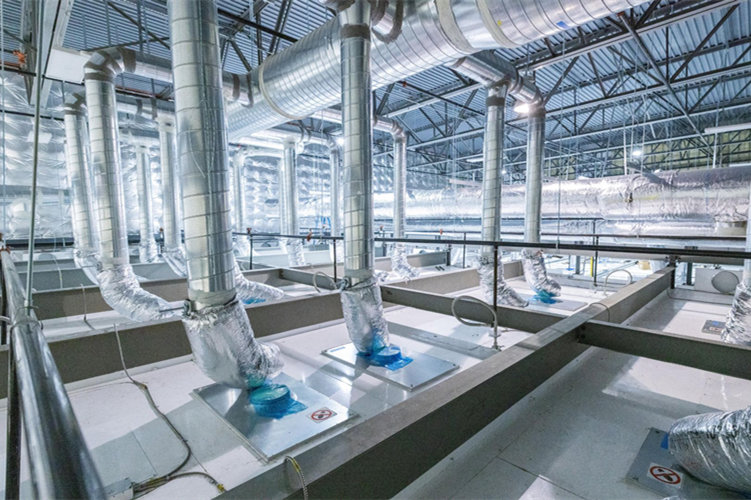
Why Must Air Duct Systems Undergo Tightness Testing After Installation?
As the core carrier for realizing functions such as building ventilation, air conditioning, and smoke exhaust, air duct systems are widely used in various scenarios including residential buildings, commercial buildings, and industrial plants. Whether it is supplying fresh air, exhausting waste gas, or adjusting indoor temperature and humidity, the airtightness of air ducts directly determines the effect, safety, and economy of system operation. Many people overlook the crucial link of tightness testing after the completion of air duct installation, but little do they know that this step is not only a regulatory requirement but also a "necessary path" to avoid many potential hazards later. So, why must air duct systems undergo tightness testing after installation?
First of all, tightness testing is the core prerequisite for ensuring the effective performance of system functions. The core function of an air duct system is to realize the directional delivery of air. If the air ducts have problems such as gaps and damage that lead to poor sealing, the delivered air will leak. For air conditioning systems, a large amount of cooling or heating energy will be lost during the leakage process, failing to accurately reach the target area, resulting in poor indoor temperature regulation effect—insufficient cooling in summer and inadequate heating in winter, which affects the comfort of living and use. For ventilation and smoke exhaust systems, leakage will lead to insufficient fresh air supply and failure to timely discharge waste gas, oil fume, or fire flue gas. This not only fails to achieve the design purpose of ventilation and smoke exhaust but also may cause deterioration of indoor air quality, and even埋下 safety hazards in emergency situations such as fires. Only through tightness testing can seal defects be found and handled in a timely manner, ensuring that the air duct system operates stably in accordance with design standards and truly exerts its due functions.
Secondly, tightness testing can effectively reduce energy consumption and improve the economy of system operation. The most direct impact of air duct leakage is energy waste. According to statistics, if the air duct system is not tightly sealed and the leakage rate is too high, it will cause air conditioning, fans, and other equipment to operate at high load for a long time—in order to make up for the leaked air volume and energy, the equipment needs to consume more electricity to maintain normal operating parameters. In the long run, this will lead to a significant increase in power consumption and the operating cost of the building. For example, in large commercial complexes, the air duct system covers a wide range and requires a large air volume. If the leakage rate reaches more than 10%, dozens or even hundreds of degrees of electricity will be consumed extra every year. Through tightness testing and timely repair of leakage points, the leakage rate can be controlled within the range allowed by the specifications, significantly reducing equipment energy consumption, reducing operating costs, and achieving the goal of energy conservation and consumption reduction.
Furthermore, tightness testing is an important means to ensure building safety and environmental safety. In industrial buildings or places with special needs, air ducts may be used to transport flammable, explosive, toxic, and harmful gases or dust. If the air ducts are not tightly sealed, these dangerous media will leak and spread into the indoor or surrounding environment, which may cause serious safety accidents such as explosions, poisoning, and environmental pollution, threatening the safety of personnel and property. Even for smoke exhaust ducts in ordinary buildings, if there is leakage, the high-temperature flue gas generated during a fire will spread to non-fire areas through gaps, leading to the expansion of the fire, obstruction of personnel evacuation, and increased losses caused by the fire. In addition, air duct leakage may also cause outdoor dust, debris, mosquitoes, and other objects to enter the system, polluting the interior of the air ducts, breeding bacteria and mold, which then spread into the room through air supply, affecting human health. Tightness testing can timely identify these potential safety hazards and avoid the occurrence of dangerous accidents.
In addition, tightness testing is a mandatory requirement in line with industry specifications and engineering acceptance standards. Both the "Code for Construction Quality Acceptance of Ventilation and Air Conditioning Engineering" and various building engineering acceptance standards clearly stipulate that after the installation of the air duct system, tightness testing must be carried out, and the test results must meet the relevant standards; otherwise, the project will not be accepted. This is because the airtightness of the air duct system is directly related to the quality of the entire building project. If this link is skipped and problems arise later that require rectification, it will not only increase the construction cost but also delay the construction period, and even affect the normal delivery and use of the building. At the same time, the results of tightness testing are also an important basis for project quality traceability, which can ensure the traceability of project quality and avoid quality disputes later.
Finally, tightness testing can reduce later maintenance costs and extend the service life of the air duct system. If tightness testing is not carried out after the air ducts are installed, the seal defects will gradually worsen during long-term operation—the pressure changes inside the air ducts and the scouring of air flow will expand the originally small gaps, leading to more and more serious leakage problems. During later rectification, it is necessary to disassemble the air ducts and re-seal them, which not only has high construction difficulty but also affects the normal operation of the system and increases maintenance costs. Through early tightness testing, all seal problems can be found and handled in a timely manner, avoiding the expansion of defects, reducing the frequency and cost of later maintenance, and at the same time protecting the air ducts from erosion by external impurities, extending the service life of the system.
In summary, the tightness testing of air duct systems after installation is not only a key link to ensure the normal performance of system functions, reduce energy consumption, and ensure safety but also an inevitable requirement in line with industry specifications and reducing later maintenance costs. Although it seems like an additional construction process, it is actually a "key step" to avoid hidden dangers, ensure project quality, and improve system economy. Therefore, both construction units and owners should attach importance to the tightness testing of air duct systems, strictly implement it in accordance with specifications, and ensure the safe, stable, and efficient operation of air duct systems.